
Category Stakeholder
What Is Technical Due Diligence In A Software Acquisition?

Technical due diligence is an independent review of a software company's code, architecture, security, intellectual property and engineering team, commissioned by a buyer or investor before a deal completes. On UK software transactions it usually takes two to eight weeks and costs from around £10,000 on a small deal to £150,000 or more on a large one.
What Is The Difference Between Bespoke And Off-the-Shelf Software?
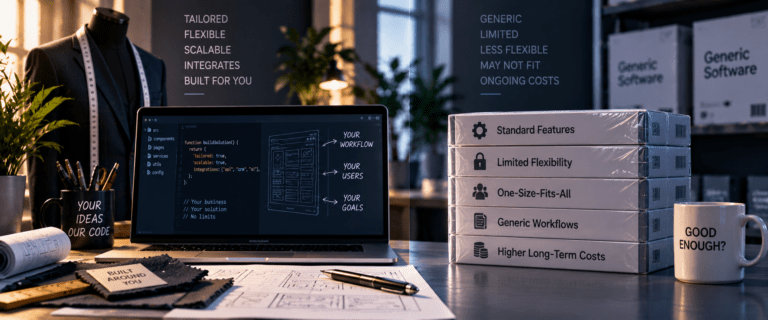
Off-the-shelf software is a finished product you licence and configure, priced for mainstream business tools at roughly £20 to £280 per user per month. Bespoke software is built to your specification, typically costs £25,000 to £500,000 to build, and leaves you owning the code and the roadmap.
How Much Do UK Software Developers Charge Per Day?

Most UK software developers charge between £400 and £750 a day in 2026. ITJobsWatch put the median UK contract rate for a software developer at £525 a day in the six months to 3 September 2026, while UK agency and consultancy rates for the same seniority typically run 40% to 80% higher because they include testing, project management and delivery cover.
What Are The Warning Signs Of A Failing Software Project?

A failing software project shows up in evidence, not atmosphere: no access to the source control repository, no test environment you can open yourself, and a completion figure that has not moved in weeks. Two or three of those together justify an independent look at the code, whatever the status report says.
How To Build A Custom AI Solution Instead Of Buying Off The Shelf

You build instead of buying when the value sits in data or a workflow you already own and no vendor sells it. In 2026 that nearly always means a hosted model doing retrieval over your own documents rather than a model trained from scratch, with a first production system costing £40,000 to £150,000 over 8 to 16 weeks.
Does Bespoke Software Qualify For R&D Tax Relief In The UK?

Sometimes, but far less often than most companies assume: bespoke software qualifies for R&D tax relief only where the project sought an advance in technology and resolved technological uncertainty that a competent professional in the field could not readily resolve. The fact that software was custom-built, expensive or unique to your business counts for nothing.
What Is The Difference Between An MVP, A Prototype And A Proof Of Concept?

The three answer different questions: a proof of concept asks whether something can be built at all, a prototype asks whether it is the right thing to build and whether the experience works, and an MVP asks whether real people will use it and pay for it. A PoC typically takes one to four weeks, a prototype two to six, and an MVP eight weeks to six months.
What Is Software Escrow And Do You Need It?

Software escrow is a three-party arrangement where a supplier deposits the source code and build materials for a system with an independent agent, who releases them to the customer if the supplier becomes insolvent, breaches the contract or stops supporting the product. Published UK agreements run from around £595 to £1,835 a year, and a deposit nobody has verified frequently cannot be rebuilt by anyone, including the people who wrote it.
How to Reduce Digital Transformation Costs for Oil and Gas?

The digital transformation in the oil and gas sector is not merely a trend but a strategic move to enhance operational efficiency, reduce costs, and minimise environmental impacts. According to a study by the World Economic Forum, the digital transformation…
How to plan a software project

Every good software project needs a well-defined purpose, objectives, and a plan for how these will be achieved. This article covers why project planning is such a vital part of any successful software project.